Custom Search
Showing posts with label Lahore. Show all posts

Tuesday, April 27, 2010

Lahore City


Lahore City


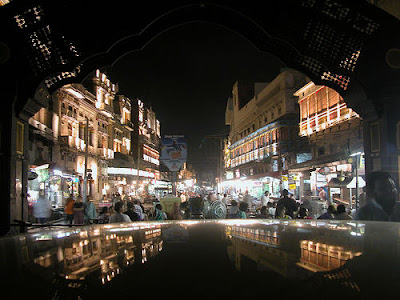
Lahore (Punjabi: لہور ਲਾਹੋਰ ; Urdu: لاہور, pronounced [laːˈhoːr] ( listen)) is the capital of the Pakistani province of Punjab and the second largest city in Pakistan after Karachi. Historically the main city of the undivided Punjab, it is often called the Garden of Mughals because of its rich Mughal heritage. It successively served as provincial/regional capital of the empires of the Shahi kingdoms in the 11th century, the Ghaznavids in the 12th century, the Ghurid State in the 12th and 13th century, the Mughal Empire in the 16th century, the Sikh Empire in the early 19th century, and it was the capital of the Punjab region under the British Raj in the mid 19th and early 20th century. Mughal structures such as the Badshahi Mosque, the Lahore Fort, Shalimar Gardens, and the mausolea of Jehangir and Nur Jehan are popular tourist attractions for the city. Lahore is also home to many British colonial structures built in the Mughal-Gothic style, such as the Lahore High Court, the General Post Office (GPO), the Lahore Museum, and many older universities including the University of the Punjab. Lahore is often referred to as the cultural heart of Pakistan, as it is the center of Pakistani arts, films and intelligentsia.

Punjabi is the native language of the province and is the most widely-spoken language in Lahore. Urdu has started to become more prominent in many areas due to its official status as the national language and due to increasing migration from other parts of the country, despite this Punjabi remains the primary means of communication in both the city and adjoining rural areas. English has also become increasingly more popular with educated and younger people due to its official status in government and preferred language status for business. Many Punjabi speakers in Lahore are known as Lahori Punjabi due to their use of a mixture of Punjabi and colloquial Urdu. According to the 1998 census, Lahore's population was nearly 7 million. Mid-2006 government estimates now put the population at approximately 10 million.This makes Lahore the fifth largest city in South Asia and the 26th largest city in the world. In 2008, Lahore was ranked as a city with High Sufficiency to become a Gamma world city. has been ranked by The Guardian as the 2nd Best Tourist Destination in Pakistan.


http://watersecretsblog.com/archives/Lahore,%20Pakistan.jpg


http://www.pakistanrugby.com/home/big_images/797px-Badshahi_Masjid_at_night_on_July_20_2005.jpg


Lahore, city, northeastern Pakistan, capital of Punjab Province, on the Râvi River. It is the principal commercial and banking center of the province. Although little industry is located in the city proper, Lahore serves as a distribution center for the heavily industrialized surrounding area.


Lahore is the site of architecturally significant buildings and monuments, many dating from the Mughal Empire (circa 1526-1707), during which the city achieved great prominence. In 1849, Lahore fell to the British. When India was partitioned in 1947, Lahore was made capital of West Punjab. Population (1998) 5,063,499.


tomb of Shah Jahan's father


http://www.inewscatcher.com/timages/740a20a08de7da83f974a8e162d524b9.jpg


http://www.ruhanisatsangusa.org/indian/sant_kirpal_singh_history/lahore_maps_pictures/lahore_city.jpg


http://m.travelpn.com/images/lahore/hotel/0/015465/Exterior_F_1.jpg


http://www.views.pk/wp-content/uploads/2007/06/lahore-canal.jpg


https://blogger.googleusercontent.com/img/b/R29vZ2xl/AVvXsEjT4QXRdEerCFPagPgGhlRXW_aVeD6CMgkzuZ8Y4ocC6w7cd_j7p5nFxMnlNWptR4veVYZzWdX5ohG5kH8vfU1eZWPhpoGPuFVnhyphenhyphenP7ZAJsuxo0ZLxw1YYNlkq0pgCs4Tv4MxlVAXQvcP_C/s400/lahore-pakistan-night-street-scene-photo.jpg


http://farm4.static.flickr.com/3343/3228050336_9830f74582.jpg

Read more...

Food Street Gawalmandi


Food Street, Gawalmandi


http://thepeopleofpakistan.files.wordpress.com/2010/02/food_street_lahore_by_kamran.jpg

Food Street in Gawalmandi, Lahore is a centre of traditional Pakistani food. The site is surrounded by centuries-old buildings and places like Landa Bazaar, Mayo Hospital and Baansan-wala Bazaar. The food street is open to traffic in the morning but as the sun sets, the street is closed to motorized vehicles. Hungry visitors arrive and stay till very late at night, enjoying some of the best local food available in Lahore. It is one of the unique tourist attractions in Lahore. It is open 24/7, except during Ramadan where food is not served during the day time. Food can be ordered from any shop while sitting at one place.

The traditional Kashmiri-Persian architecture can still be seen, used extensively in buildings surrounding that place, as seen in the pictures below.

http://img.metro.co.uk/i/pix/2009/07/lahoreIB_450x500.jpg


http://www.palinstravels.co.uk/photos/him/main/him_061_01_l.jpg


File:June21 2004 FoodStreet Lahore (0).jpg


FoodLahore Soghat
File:FoodLahore Soghat.jpg


File:June21 2004 FoodStreet Lahore (4).JPG


File:June21 2004 FoodStreet Lahore (2).JPG


File:June21 2004 FoodStreet Lahore.jpeg

Read more...

Gaddafi Stadium


Gaddafi Stadium in lahore


http://reverseswing.files.wordpress.com/2009/11/gaddafi-stadium.jpg

Gaddafi Stadium is a cricket ground in Lahore, Pakistan. It was designed by Pakistani architect Murat Khan and completed in 1959. Some additions were added many years later by Nayyar Ali Dada.

Following the ground's renovation for the 1996 Cricket World Cup, it has a capacity of over 60,000 spectators. The stadium was originally named the "Lahore Stadium", but was renamed in 1974, in honour of Colonel Gaddafi.


Dera Lahore

http://farm1.static.flickr.com/27/56816757_1487d632e1.jpg

Ground history
The ground was originally named "Lahore Stadium", but was renamed in 1974 in honour of Colonel Gaddafi of Libya after a rousing speech he gave at an Organisation of the Islamic Conference meeting in favour of Pakistan's right to pursue nuclear weapons.

Gaddafi Stadium also houses the headquarters of the Pakistan Cricket Board.

In 1995-96, the stadium was completely renovated by original architect Nayyar Ali Dada for the 1996 Cricket World Cup. The stadium held the final, with over 60,000 spectators.

Designed by the famous architect Nayyar Ali Dada who modelled it on the Mughal School of red hand-laid brickwork and arches, the new stadium is completely covered with plastic seating rather than concrete benches. The lower portion under the stands has been enclosed and converted to shops for boutiques and offices. This was the first stadium in Pakistan to be equipped with modern floodlights which have their own standby power generators. Modern facilities for the media are also provided.

Fortress Stadium market
http://cache.virtualtourist.com/1127332-Fortress_Stadium_market-Lahore.jpg


Cricket history
Three hat-tricks have been taken at the stadium, by Peter Petherick of New Zealand against Pakistan, October 9, 1976, Wasim Akram of Pakistan against Sri Lanka, March 6, 1999 and Mohammad Sami of Pakistan against Sri Lanka,

Pakistan have enjoyed some memorable moments on the ground, including a fifth-wicket stand of 281 between Javed Miandad and Asif Iqbal against New Zealand in 1976 and an innings and 324 run win against New Zealand in 2002 The stadium hosted the final of the 1996 World Cup, which was watched by over 60,000 spectators. However, despite the impressive capacity, the ground is often sparsely attended for Test matches, with sometimes as few as 1000 fans turning up. One-day internationals, as with the whole of the subcontinent, are more popular; crowds in excess of 20,000 are common.

On 3 March 2009, the scheduled third day of second Test of 2008–09 Sri Lanka tour of Pakistan, the Sri Lankan team's convoy was attacked by armed militants at Liberty round about near Gaddafi stadium. Eight Sri Lankan players were injured, including Sri Lankan captain, Mahela Jayawardene. The Sri Lankan team was air-lifted from Gaddafi Stadium to a nearby airbase, from where they were evacuated back to Sri Lanka.

http://static.cricinfo.com/db/PICTURES/CMS/110400/110408.jpg

Read more...

Lahore Zoo


Lahore Zoo


File:Entrance lahore zoo.jpeg

The Lahore Zoo in Lahore, Punjab, Pakistan, established in 1872, was once considered one of the largest zoos in Asia.

http://farm4.static.flickr.com/3161/2950458125_83d4b69fc0.jpg

History

It started as a small aviary that was donated by Lal Mahundra Ram. Gradually it developed and its animal collection also increased, today the Zoo houses about 1381 animals of 136 species including 996 birds of 82 species, 49 reptiles of 08 and 336 mammals of 45 species. It remained under the management of Lahore Municipal Corporation from 1872 to 1923. Thereafter, its control was given to Deputy Commissioner, Lahore until 1962. Then its management was placed under the Livestock and Dairy Development Department. Finally the management of Lahore Zoo was entrusted to the Wildlife & Parks Department in 1982. During the period 1872 to 1982, it remained a small entity with very little development taking place. Since its transfer to Wildlife Department 1982 there have occurred a number of changes in housing the exhibits, layout of buildings, landscape pattern, administration etc with these initiative/development it become self-financing organization and now it is self-reliant. It is located in the heart of the city and is easily accessible to the people belonging to all walks of life. This zoo also contains a botanical garden.

Few efforts have been made to improve the living conditions of the animals in the zoo until recently. In May 2009, a high school student named Abrar Abidi pursued his Eagle Scout Leadership Service Project at the zoo. His project aimed to significantly enhance the animals' behavioral and social atmosphere, through an addition of enrichments in their cages. He aimed to help the animals most in need, which were the: tigers, lions, primates, and otter. Abrar planned and gathered necessary materials over four months. Much of his resources were fabricated and donated by a materials engineer at the Lahore University of Management Sciences. Once he had everything, he brought a group of his school friends to finally put the project to action. His project was covered widely by the Pakistani television stations and newspapers, and the affects of his project can still be seen today.


http://www.tribuneindia.com/2005/20050322/wd2.jpg


http://upload.wikimedia.org/wikipedia/commons/0/08/Eagle_Lahore_Zoo_June302005.jpg


http://www.pakzoo.info/wp-content/uploads/2009/08/lahore-zoo-15.JPG


http://lahore.metblogs.com/archives/images/2006/10/Lahore%20%20%20Zoo.jpg


http://farm4.static.flickr.com/3037/3106681020_86faaeef09.jpg?v=0


http://cache.daylife.com/imageserve/05Le7B435odQB/610x.jpg


http://farm4.static.flickr.com/3473/3720169422_f7ffef0b52.jpg


http://www.nation.com.pk/uploads/news_image/large/Fateofsmuggledtigressesstillunclear_5722.jpg
LAHORE - Two white tigresses, currently ‘detained’ at the Lahore Zoo by the Customs Intelligence, are awaiting their status to be determined for the last four months, as it is believed that they have been smuggled into Pakistan from Indonesia in violation of international rules governing the import of rare species.
According to sources, an inquiry has also been launched by the government to ascertain whether or not the supplier had fulfilled all legal requirements before importing the animals, and if they actually belonged to the rare species of white tigers as claimed by the importer.
The Lahore Zoo management reportedly sought the necessary permission from the National Council for Conservation of Wildlife (NCCW), Islamabad to import two female tigers from Indonesia, but only after the animals were brought to Pakistan by the supplier, Mr Javaid Khan of Marine World in February 2009.
The permission was granted from the date of its issuance, but it was withdrawn after some time when it was brought into the notice of the NCCW that the animals had already reached the country. The Council also called for a report on how the tigresses were brought to the country without its permission.
The idea to import white tigresses for the Lahore Zoo was to breed them with a white tiger, already there in the Zoo, to get white offspring. But experts believe that these white big cats are albino, not belonging to any particular species, and hence had got little chance of reproducing white children.
Informed sources in the Lahore Zoo told this scribe that Director General Wildlife & Parks Punjab notified a committee on November 24, 2008 to ensure the procurement of Zoo exhibits strictly in accordance with the specifications, terms and conditions, good health and pedigree. The said committee met on March 2, 2009 to discuss the purchase of white tigers and other issues. Abdul Qadeer Mehal, Director Wildlife & Parks Punjab was its chairman while Syed Tauqeer Hussain Shah, Vice-Chairman Zoo Maintenance Committee Muhammad Naeem Bhatti, Under Secretary (Wildlife) and Director Lahore Zoo were notified as members.
The insiders told The Nation that during the meeting the Director Lahore Zoo could not produce import documents of the white female tigers and informed the committee that supplier had not given the documents as yet. The Director was, therefore, advised to obtain all the relevant documents from the supplier, which include: bill of landing, custom clearance documents, export CITES permit from the country of origin, import CITES permit from the NCCW, detailed pedigree of the animals with pedigree of three generations and health certificate of the animals.


http://upload.wikimedia.org/wikipedia/en/4/4a/Lahore_zoo_-_june_3_2004-ticket.JPG
Ticket costs US $0.20

Read more...

International Airport Lahore


Alama-Iqbal International Airport Lahore


Allama Iqbal International Airport (IATA: LHE, ICAO: OPLA) (Urdu, Punjabi: علامہ اقبال بین الاقوامی ہوائی اڈا) is the second-largest civil airport in Pakistan, serving Lahore, the capital of the Punjab province. Previously known as the Lahore International Airport, it was renamed after Allama Sir Muhammad Iqbal, the Islamic poet-philosopher who was a major advocate for the creation of the state of Pakistan.

The airport currently has three terminals; the Allama Iqbal terminal, the Hajj terminal, and a cargo terminal. The airport is located about 15 kilometres from the centre of the city.

http://farm1.static.flickr.com/24/97461372_766de87f3f.jpg?v=0
The International Departure lounge


File:Allama Iqbal Intl on Indpenedance Day.jpeg
The Allama Iqbal International Airport fully decorated to celebrate the Independence Day of Pakistan


File:Lahore-PIA-747-TakeOff-80375.JPG
A PIA B747-367 departing


File:Shaheen Air International Boeing 737-200 .jpg
A Shaheen Air Boeing 737-200 being serviced at a remote stand


File:PIA-F27-Lahore-30861.JPG
A PIA Fokker F27 with a Lufthansa Cargo MD-11F in the background


http://img.metblogs.com/lahore/files/2008/10/aiiaapron.jpg


http://farm2.static.flickr.com/1345/563073960_decccd149f.jpg


http://farm4.static.flickr.com/3073/2486979147_588529091a.jpg

Read more...

Lahore stock exchange


Lahore stock exchange


Lahore Stock Exchange (Guarantee) Limited is Pakistan's second largest stock exchange after the Karachi Stock Exchange. It is located in Lahore, Pakistan.


http://www.utnt.net/infovision/NMS/Clients/5207/images/Stock%20Exchange%20Front-edited-2.jpg

History

The Lahore Stock Exchange (Guarantee) Limited came into existence in October 1970, under the Securities and Exchange Ordinance of 1969 by the Government of Pakistan in response to the needs of the provincial metropolis of the province of Punjab. It initially had 83 members and was housed in a rented building in the crowded Bank Square area of Lahore. The number of listed companies has increased to 519 since its inception. With 37 sectors of the economy and 519 listed companies with total capital of Rs. 555.67 billion having market capitalization of around Rs. 2.51 trillion . The LSE has 152 members of which 81 are corporate, and 54 are individual members. The LSE was the first stock exchange in Pakistan to use the internet and currently 50% of its transactions are via the internet.

The Lahore Stock Exchange has opened branches in the industrial cities of Faisalabad and Sialkot for trading. The Sialkot branch is referred to as the "Sialkot Trading Floor".

http://www.lahorestock.com/About/gallery/Independence%20Day%202009/08.jpg


LSE Index


LSE-25: The Lahore Stock Exchange Twenty Five company index also calculates the performance of stocks assuming that all rights issues and bonus share issues only increase the listed capital. In the case of bonuses or rights the prices of the shares are not adjusted as they are in the case of the LSETRI. However, the LSE25 assumes that dividends paid out by a component company are not reinvested. In summary, in the LSE25, no price adjustments are made when any component company issues cash dividends.

The Lahore Stock Exchange Total Return Index calculates the performance of stocks assuming that all payouts are reinvested in the index on the ex-date. The LSETRI assumes that if a component company issues bonus shares or announces a rights issue it will increase the listed capital. Additionally, the LSETRI also assumes that all pay-outs by a component company are 100% reinvested in the index. Therefore, the LSETRI is adjusted against such payouts announced by any of index constituents on its ex-date allowing the index value to remain comparable over time. Some of the most notable Stock Brokers in Lahore Stock Exchange include: Mubashar Latif (President), Azan Mubashar (Executive Vice-President), Abubakar Muabshar (C.E.O),

http://farm1.static.flickr.com/22/34139538_92ca63424d_o.jpg


Read more...

Sunday, April 25, 2010

Lahore Fort


Lahore Fort

http://www.gardenvisit.com/assets/madge/lahore_fort_2127_jpg/600x/lahore_fort_2127_jpg_600x.jpg


The Lahore Fort, locally referred to as Shahi Qila (Urdu: شاهی قلعہ ) is citadel of the city of Lahore, Punjab, Pakistan. It is located in the northwestern corner of the Walled City of Lahore. The trapezoidal composition is spread over 20 hectares.

It is not known who built the fort and neither is it known when it was built. Origins of the fort go as far back as antiquity, however, the existing base structure was built during the reign of Mughal emperor Akbar (1556-1605), and was regularly upgraded by subsequent rulers, having thirteen gates in all.[1] Thus the fort manifests the rich traditions of Mughal architecture.[2] Some of the famous sites inside the fort include: Sheesh Mahal, Alamgiri Gate, Naulakha pavilion, and Moti Masjid. In 1981, the fort was inscribed as a UNESCO World Heritage Site along with the Shalimar Gardens (Lahore).


http://farm1.static.flickr.com/139/359364265_7fc0f01683.jpg
The Lahore Fort aka Shahi Qila (Urdu: شاہی قلعہ), locally referred to as Shahi Qila citadel of the city of Lahore, Punjab, Pakistan. It is located in the northwestern corner of Lahore, adjacent to the Walled City. Some of the famous sites within the fort are: Sheesh Mahal, Alamgiri Gate, Naulakha pavilion, and Moti Masjid. The fort is 1,400 feet long and 1,115 feet wide. In 1981, the fort was inscribed as a UNESCO World Heritage Site along with the Shalamar Gardens.


http://www.clothmen.com/PageFile/lahore-fort.jpg


Origins


The origins of Lahore Fort are obscure and are traditionally based on various myths.[3] However, during the excavation carried out in 1959 by the Department of Archaeology, in front of Diwan-e-Aam, a gold coin of Mahmood of Ghazni dated A.H. 416 (1025 A.D.) was found at a depth of 7.62 metres from the level of the lawns. Cultural layers continued to a further depth of 5 metres, giving strong indications that people had lived here, long before the conquest of Lahore by Mahmood in 1021 A.D.[4] Further mention of the fort is traceable to Shahab-ud-din Muhammad Ghuri's successive invasions of Lahore from 1180 to 1186 A.D.


http://discreet-vision.com/images/gallery/big/1_Bara%20Dari%20Lahore%20Fort.jpg


File:The Lahore Forts Alamgiri Gate Picture2 taken at night - July  20 2005.jpg


File:Jharoka Diwan-i-Aam.jpg


File:Moti Masjid Interier.JPG


File:July 9 2005 - The Lahore Fort-Another sideview of Naulakha  pavillion.jpg


File:July 9 2005 - The Lahore Fort-Front center view of hall of  special audience.jpg

Read more...
free counters

Followers

Text

  ©Template by Dicas Blogger.